In Short
- Premier Power Washerz restores pavers across North NJ: deep cleaning, polymeric sanding, and sealing in one project.
- Full restoration covers patios, walkways, and pool decks, and stops the weed and ant problems that start in joints washed out by rain.
- Local, insured crew. Free estimates: 800-585-3619.
Why Pavers Go Downhill
A paver patio is one of the most expensive surfaces on your property, and it degrades in a predictable order. First the joint sand washes out. Then weeds and moss move into the empty joints. Then the surface fades and stains, and ants discover the sandless joints make excellent front doors. None of that means the patio is done. It means it is due.
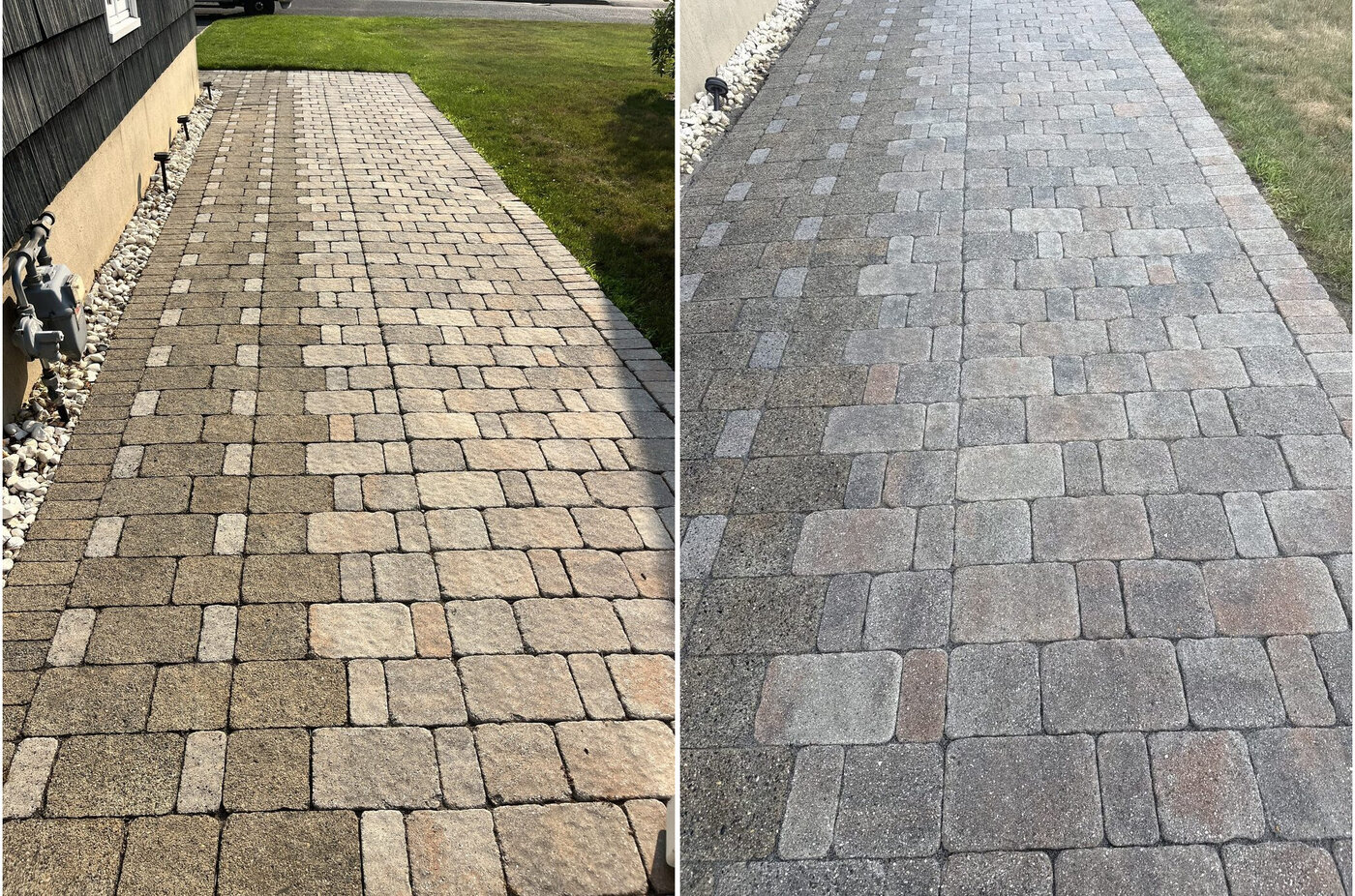
Restoration reverses the whole sequence. We deep clean the surface and joints, kill the organic growth, refill the joints with polymeric sand that hardens against weeds and washout, and seal the surface so color stays rich and stains wipe off instead of soaking in.
The Restoration Process
- Deep clean: surface grime, algae, and old joint material removed completely
- Weed and moss treatment in every joint, not just the visible ones
- Polymeric polymeric sanding: joints refilled and compacted with sand that hardens in place
- Sealing: a professional grade sealer that deepens color and repels stains
- Final walkthrough once everything cures, so you see exactly what you paid for
Where It Pays Off
PatiosThe main event. A restored patio reads like a new installation at a fraction of replacement cost.
Walkways & EntriesThe first thing every guest and buyer walks on. Restored joints also mean fewer trip edges.
Pool DecksClean, sealed pavers around a pool resist the constant water exposure that ages them fastest.
Driveway ApronsPaver borders and aprons that match the restored patio instead of clashing with it.
Selling the house? Paver restoration is one of the highest impact, lowest cost exterior upgrades before listing. Buyers read a crisp paver patio as a maintained property, and photos of it do real work in the listing.