The Green Wall Problem: Why Heights Homes Grow Algae
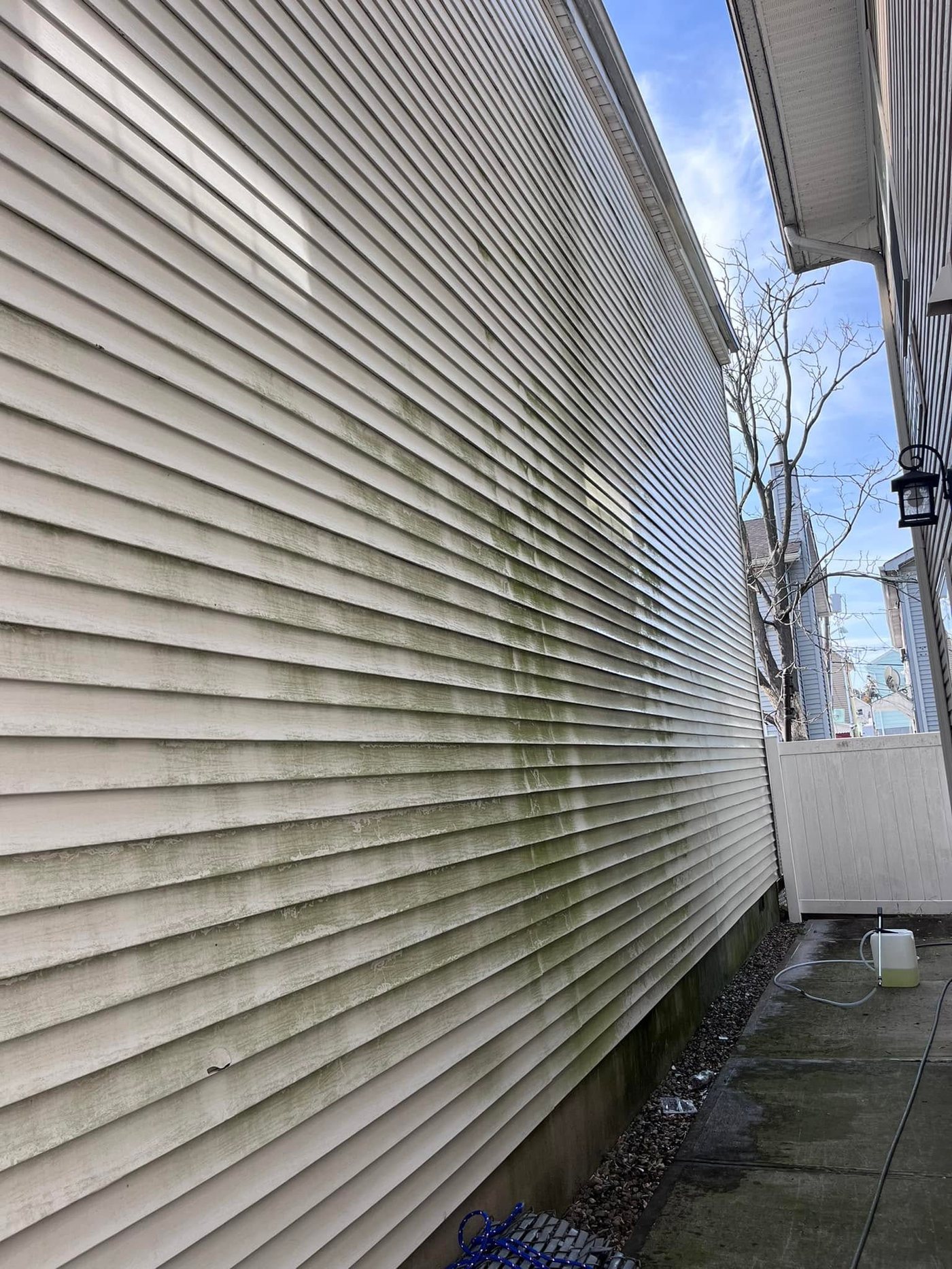
The classic pattern: green concentrated on the shaded side, heaviest where two houses sit close together.
- The green film on Jersey City Heights siding is algae: a living growth that comes back if you only rinse it.
- It shows up first on shaded, north facing, and tight side yard walls where sun never reaches.
- Soft washing kills the growth at the root so the clean lasts. Premier Power Washerz: 800-585-3619.
Drive the Heights and you will see it on block after block: vinyl sided two and three family homes with one wall going green. Not the front. Almost always a side wall, usually the north facing one, and worst in the narrow gap between two houses. That is not dirt. It is gloeocapsa and green algae, it is alive, and it is eating light, moisture, and the surface of your siding.
Why The Heights Specifically
Jersey City Heights housing was built close. Side yards run a few feet wide, which means side walls live in permanent shade with almost no airflow. Morning dew and rain dry slowly there, and algae needs exactly two things: dampness and shade. The neighborhood's mature street trees, one of its best features, make the shade deeper. The result is a microclimate between every pair of houses that grows algae the way a greenhouse grows tomatoes.
Why Rinsing It Does Not Work
Because algae is an organism, not a stain. Blast it with plain water and you remove the surface layer while leaving the roots in the siding texture, and it grows back in months, often darker. Worse, high pressure on vinyl forces water behind the panels, where it has no drainage path. The fix is chemistry, not force: a soft wash solution that kills the growth completely, applied at low pressure, given time to work, then rinsed. Done that way, the wall stays clean for one to two years instead of one summer.
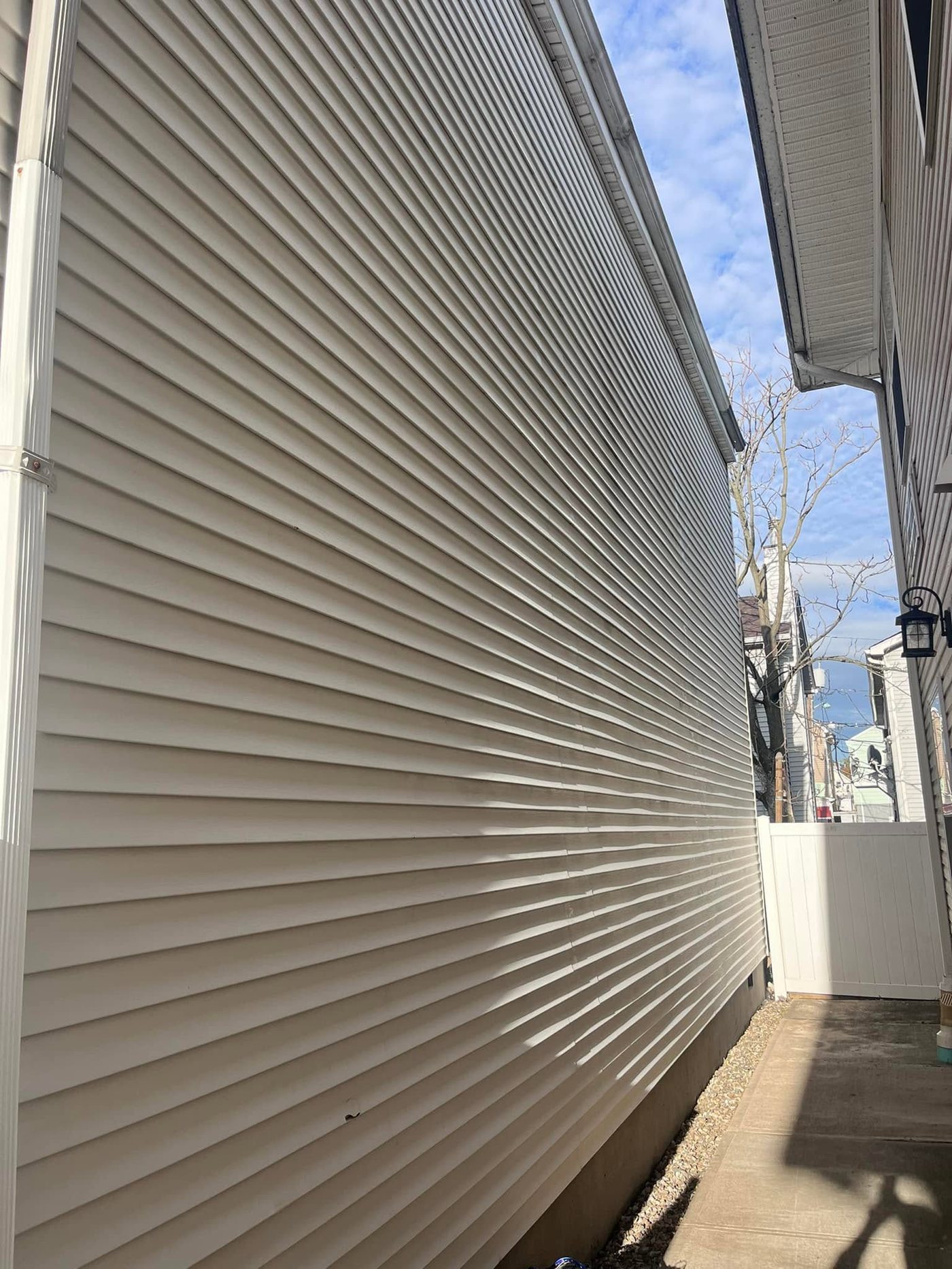
The same wall after a proper soft wash. No paint, no new siding. Chemistry and patience.
What It Means For Your Property
- Left alone, algae holds moisture against the siding and shortens its life, so the wash is maintenance, not cosmetics
- For two and three family owners, green walls read as deferred maintenance to tenants and appraisers alike
- Selling? Agents in Jersey City increasingly order a wash before photos, because clean siding photographs like new siding
Read next: House Wash And Window Cleaning In Jersey City Heights